
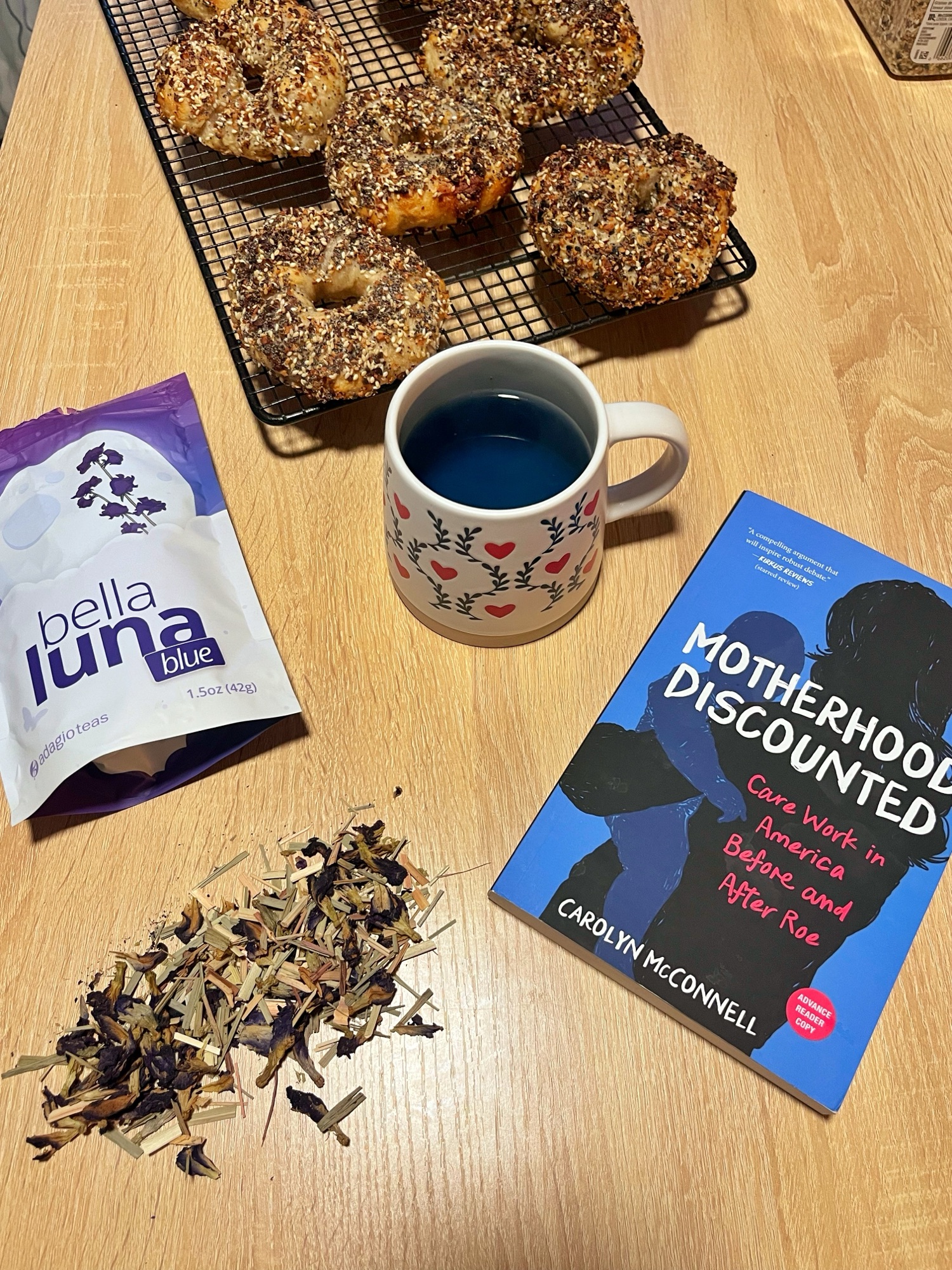
*I received this book from the publisher in exchange for an honest review.*
Title: Motherhood Discounted: Care Work in America Before and After Roe
Author: Carolyn McConnell
Publisher: She Writes Press
Publication Date: May 26, 2026
ISBN: 9788896363149
Synopsis:
In the wake of Dobbs, and now with the country in the grip of Trump and a resurgent far right, the question everyone seems to be asking is—How could this happen in America? Lawyer Carolyn McConnell has a few ideas. After becoming a mother, McConnell was forced to face the myth of autonomy that American individualism breeds: the idea that independence is always good and dependence always bad.
In Motherhood Discounted, McConnell turns a searching eye on autonomy, asking what it is and what it is for. Tracing this myth’s development through American history, she frames each episode with personal stories and analysis. In doing so, she offers women readers of all ages seeking to understand their own experiences in these disturbing times a potent explanation for how we got here—and sounds a call for political change.
——
As a mother living in a country boarding the United States, reading Motherhood Discounted was both a reminder of how lucky I am to live in the country I do, but also a stark reminder of the challenges that so many women—and mothers—face, and that, whether a mother or not, women continue to fight an uphill battle for equality, as well as recognition for the load of care work that we carry in addition to work done outside of the home. Despite all the progress we think that we’ve made in terms of gender equality, some of the policies that have been introduced, and the precedent that’s been struck down, many gains for equality have been exposed as unbearably fragile, easily shattered and dismantled.
McConnell takes the reader through the history of the fight against women’s physical and reproductive autonomy, and the biases working against those who are relegated to positions of care within the home without compensation or without understanding of the toll that care work takes. It sheds like on the places where women, and mothers in general, are undervalued both in the home and by society at large. There is no statement against those who find their work within the home—in fact, that is something to be celebrated, as it’s not an easy task and carries many burdens. The issue arises when there is no recognition or compensation for the work being done, when the work is assumed to fall to the responsibility of one person in a relationship over another, when there are no benefits paid to support those who have no choice but to give up work outside to provide care work inside the home.
McConnell sheds light on the societal assumption of a woman’s role and responsibility in a household that in recent years has slid further backwards in time than we could have ever imagined. Women in America are persecuted and are even dying for making a choice over their own bodies that doesn’t suit the image or beliefs of others. Those that choose—or are forced—into motherhood are disadvantaged from the start. They must choose to stay at home to assume a position of care, giving up their own personal autonomy and making great financial sacrifice. Or, they must return to work in the earliest days of new motherhood in many instances, at great personal cost and leaving care work to others. Especially today, in an economy where most homes need two incomes to live comfortable, mother’s hands are tied with very little support from the government. Those who do not have a partner must often work multiple jobs, usually at low wages, while they earn enough to feed their families and relying on others to help raise children.
There is no winning. To be dependent on another person, or to rely on social services like welfare or other financial benefits, is perceived as a drain on the system and doesn’t apply to nearly enough of the mother’s and care providers that need it. McConnell sites a broken system, stemming from a fractured history, and perpetuated by misguided leadership and a biased government. As views become more extreme, she points out, more and more women are put at risk, and must suffer the consequence of choices being made about them, their bodies, and their living situations, all without their input.
It’s a frightening, but very real message: mothers give everything of themselves, including their lives in some cases, but rarely is there true acknowledgement and proper compensation for the work and sacrifices that they make. McConnell calls for the reader to seek change, to recognize the detriments of the current policies and administration, and to speak out in support of personal rights and the freedom to choose.
The arguments in this book are enlightening, especially as they are tied back to historical development and the changing role of women in society. McConnell’s writing brings a message of feminism and progressiveness, all from the perspective of motherhood. It’s an interesting take and exposes how recent changes are setting women’s rights back exponentially. I hope you’ll take some time to read her words and reflect on their poignancy in today’s society.
Happy reading!
Featured in the photo: Bella Luna tea by AdagioTeas. I’ve had many weekend mornings and weekday evenings on the couch with a blanket and a cup of Bella Luna tea. I’ve been fortunate to receive an #ARC from the publisher for review, as well as a brand new tea from Adagio Teas. A vibrant colour, but a calming and taste, the Bella Luna Blue is a solid addition to my tea collection (https://www.adagio.com/bella_luna_blue/index.html). Available May 31, 2026.
a.html).
⭐️ ⭐️ ⭐️ ⭐️ ⭐️


